
Every service call starts with a question: does the technician at the door know this machine? When the answer is no, the result is a second visit, a frustrated customer, and a cost that multiplies across every call a field team makes. To show what a better answer could look like, Reality Ready Training, the workforce training division of CampusXR, built a demonstration system around WASH, a laundry equipment and services provider. The demo shows how one shared content base can prepare technicians before the job and support them during it.
The Challenge in the Field
Laundry equipment varies by manufacturer, model, and generation. A technician might service an LG Giant C Max in the morning and a Hisense front-loader in the afternoon, each with its own drum assembly, control board, and water valve layout. Traditional onboarding relies on manuals, classroom sessions, and ride-alongs, which are slow to scale and hard to recall on site. Faced with an unfamiliar model, a technician can dig through documentation, call a supervisor, or schedule a return visit. The demo explores a different approach: one system that builds competency before the first job and stays with the technician through every call after it.
Exploring the Machine Before Opening a Panel
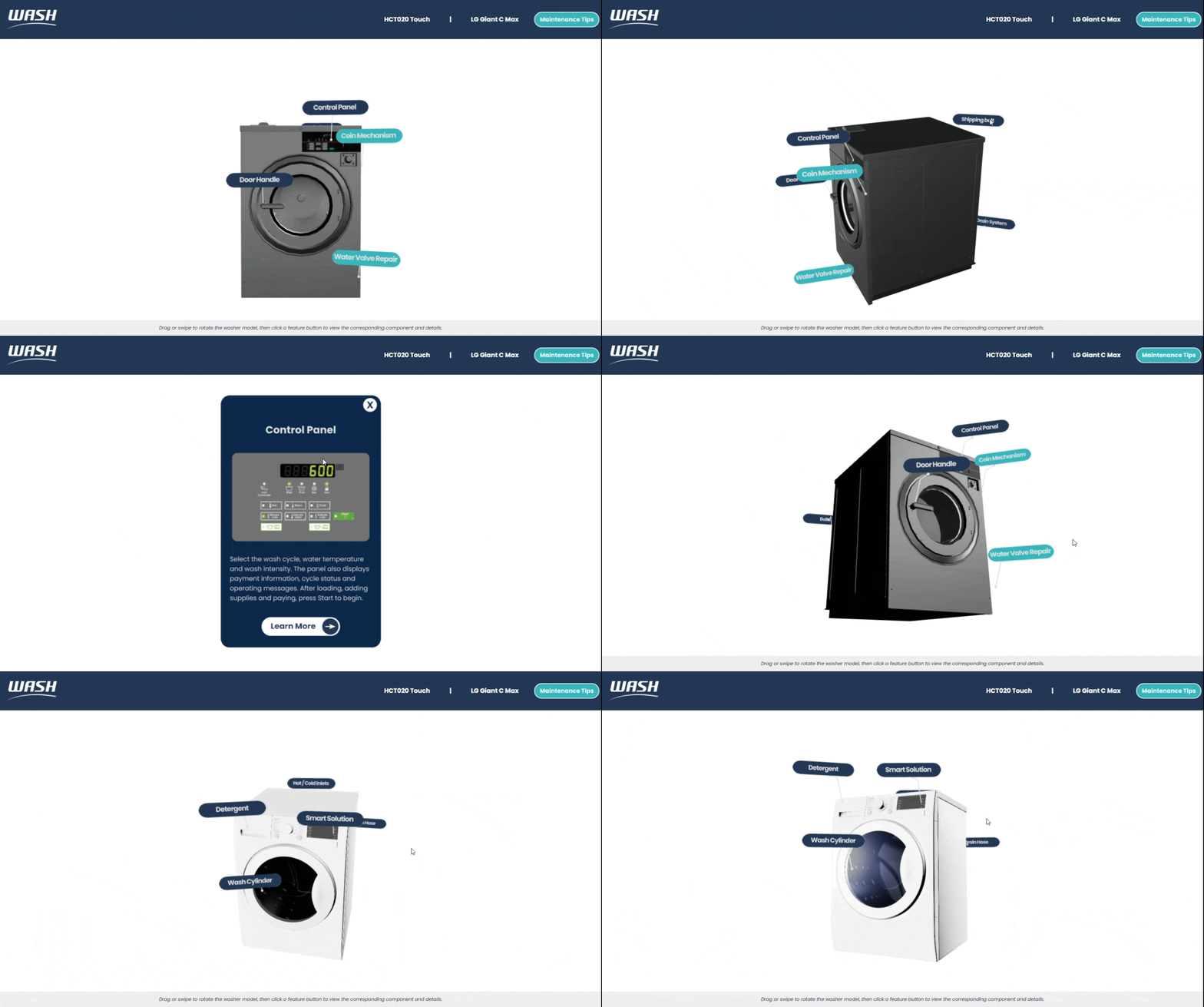
The experience begins with interactive 3D machine models that run in a browser through WebXR. Technicians rotate the equipment, switch between models instantly, and click hotspots such as the control panel, coin mechanism, and water valve. Each hotspot opens real service photos and plain-language repair steps, so a technician can understand a washer’s internal systems before opening a panel on site. The experience works as a standalone site or embeds in an existing LMS, with no app download. Watch Full Demo
Guidance on Site, From Recognition to Remote Expert
On the job, AR live model recognition turns the machine itself into the interface. A technician points a phone or tablet camera at the equipment, with no app or login required, and labels pinpoint the drum, drain pump, and control panel while repair videos, part diagrams, and step-by-step instructions appear layered over the machine.
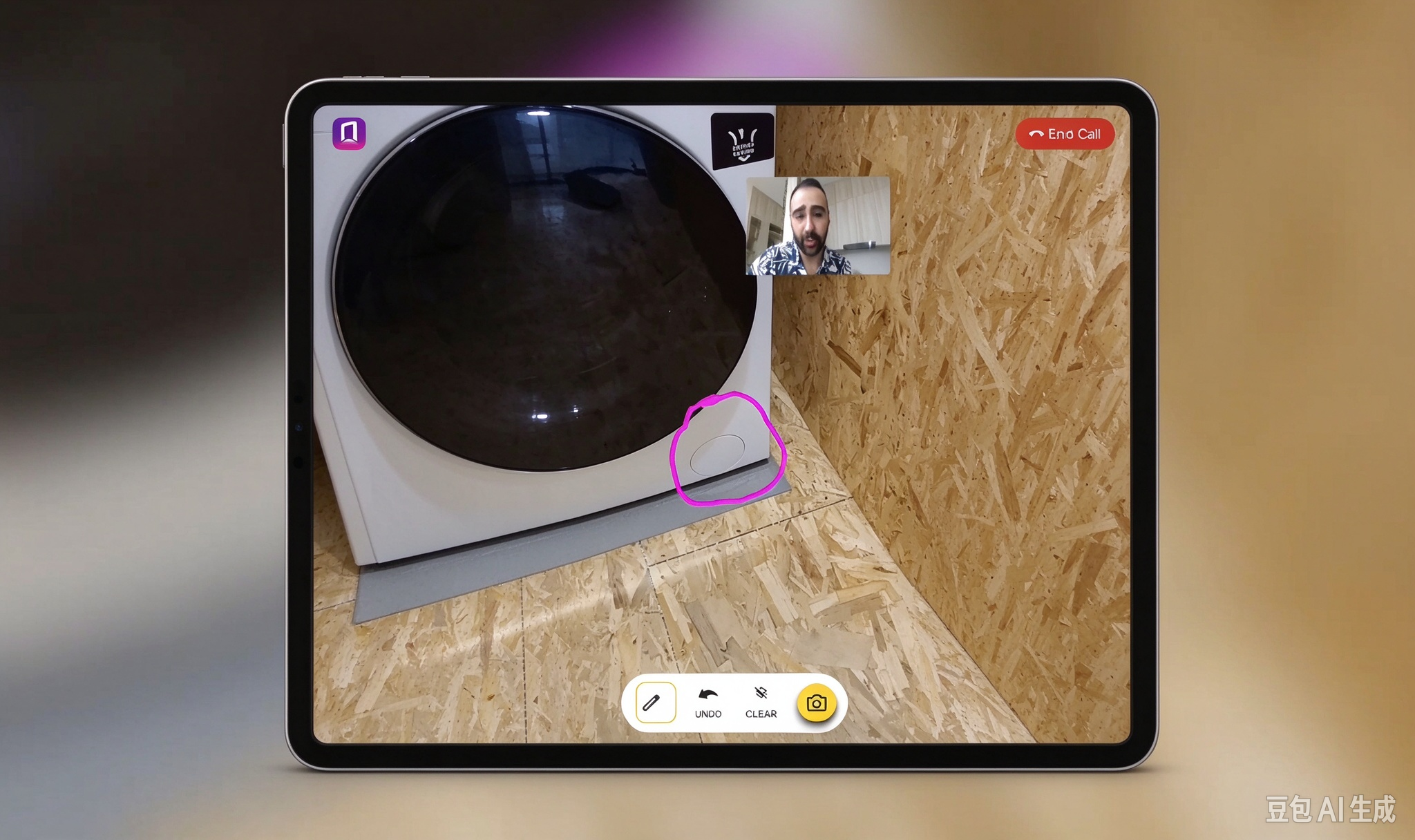
When a call gets more complicated, the AI LiveOps assistant takes over. Technicians snap a photo or ask a question and receive troubleshooting steps drawn from the company’s own equipment manuals. If they need more, they can escalate to a live video call where a remote expert draws annotations directly on the camera feed, pointing to the exact valve or wire. The same guidance can reach technicians hands-free through AI glasses. Watch Full Demo
Building the Training Behind It
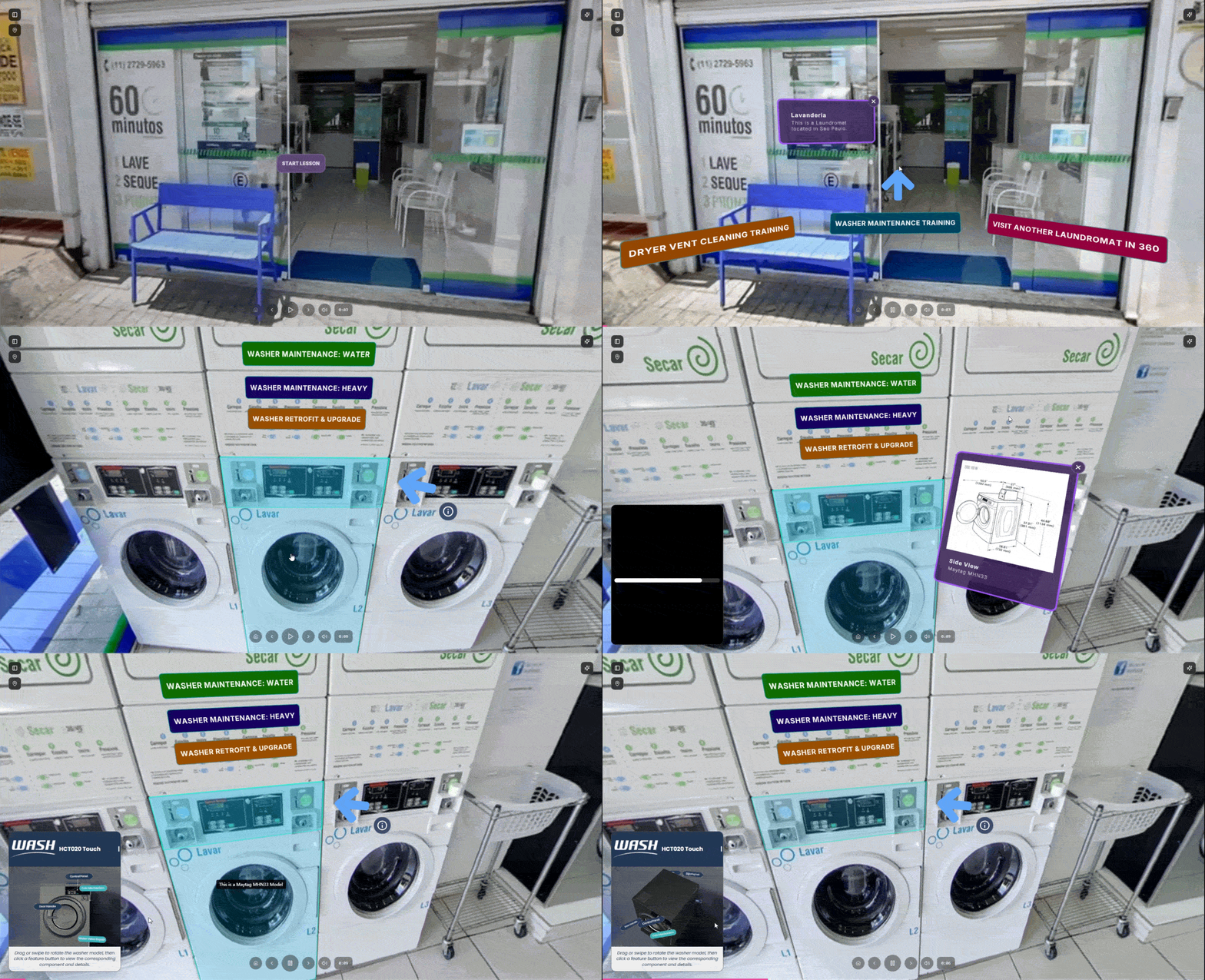
The training layer runs on 360Works, Reality Ready Training’s flagship platform. Teams build and publish immersive lessons from 360° photos and video, standard video, or slides, with an integrated AI creator to speed up design. Lessons publish as private links, embed in an LMS, track learner progress through analytics, and open in VR through the 360Works Oculus app. Optional services add branching lesson pathways, gamified quizzes, multi-language support, and AI content support that turns existing documents into interactive lessons.
Because everything draws on one content base, a model, lesson, or support answer is built once and reused everywhere. Updating operational knowledge once keeps the whole system current. Watch Full Demo
A System That Gets Smarter
Every training session, work order, and live-assist call is logged automatically, with no extra work for the team. Analytics show where technicians get stuck and which issues repeat. The AI agent learns from real technician questions and real expert answers, so what takes a phone call today becomes an instant answer tomorrow.
Modeling the Impact
A modest cut in repeat visits adds up quickly at scale. The demo uses placeholder inputs: 480,000 annual service calls, an 18% second-visit rate, and a fully loaded cost of $135 per extra visit. That produces 86,400 repeat visits a year. A 15% reduction avoids 12,960 of them, which models to about $1.75M in recovered cost annually. Calls resolved before dispatch would add to that figure. These numbers are illustrative and would be replaced with real dispatch data and work order history during discovery.
Broader research points in the same direction. Reports suggest VR-trained learners can train up to four times faster than in a classroom and feel up to 275% more confident applying their skills.
Why This Matters for Field Service
Training and support work best as one system, not two. When the content that onboards a new hire also powers on-site guidance and remote help, every update reaches every technician at once. The result is a workforce that arrives prepared, fixes it the first time, and improves with every call.
Reality Ready Training brings more than a decade of edtech experience, over 550 XR experiences, and the expertise of the team behind Augmented World Expo to service and training organizations. To explore what this could look like for your team, visit rrtraining.org or email contact@rrtraining.org.