
Let customers fix the simple things themselves.
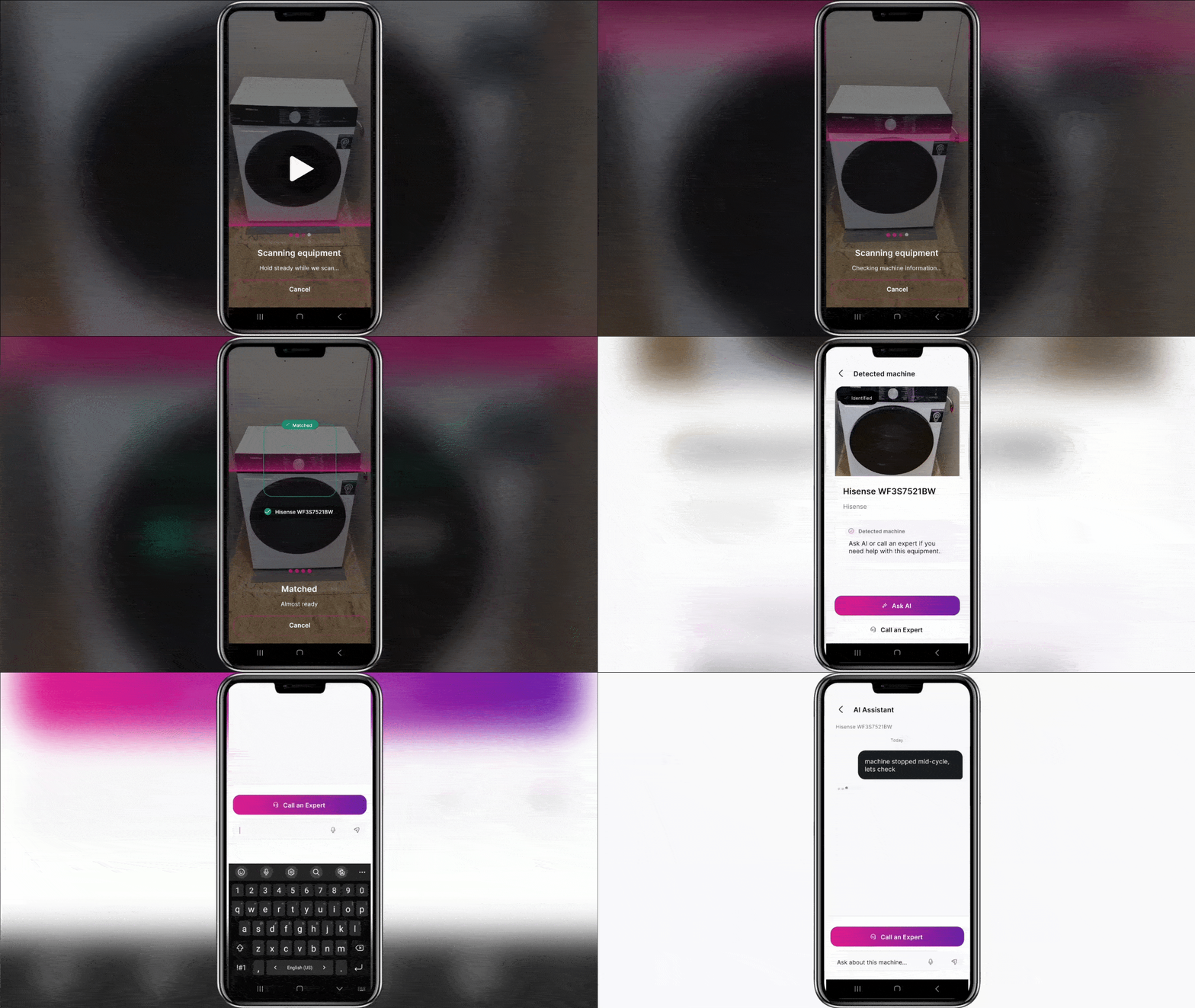
Give customers a guided fix at the machine. They scan a code, describe the problem, and follow a short video. The simple faults resolve without a call, a ticket or a truck.
The problem
When equipment stops working, a customer's only real options are to call or to wait. A large share of what reaches a support line isn't a repair at all: a reset, a filter, a door that isn't seated properly, a setting changed by mistake.
Those calls cost the same to answer as the genuine ones, and the customer waits just as long for an answer they could have had immediately. Published manuals and FAQ pages rarely close the gap, because the person who needs help is standing in front of the machine rather than sitting at a desk.
What we build
Appliance manufacturers. Authorized service networks. Equipment dealers.
Anyone supporting machines they didn't install and can't see.
02 An assistant that knows your equipment.
It answers from your manuals, bulletins and repair footage, instead of a general-purpose model guessing at a machine it has never seen.
01 A code on every unit.
Scanning it identifies the exact model before the first question is asked, instead of asking a customer to find a serial number behind the machine.
03 Fixes customers can follow.
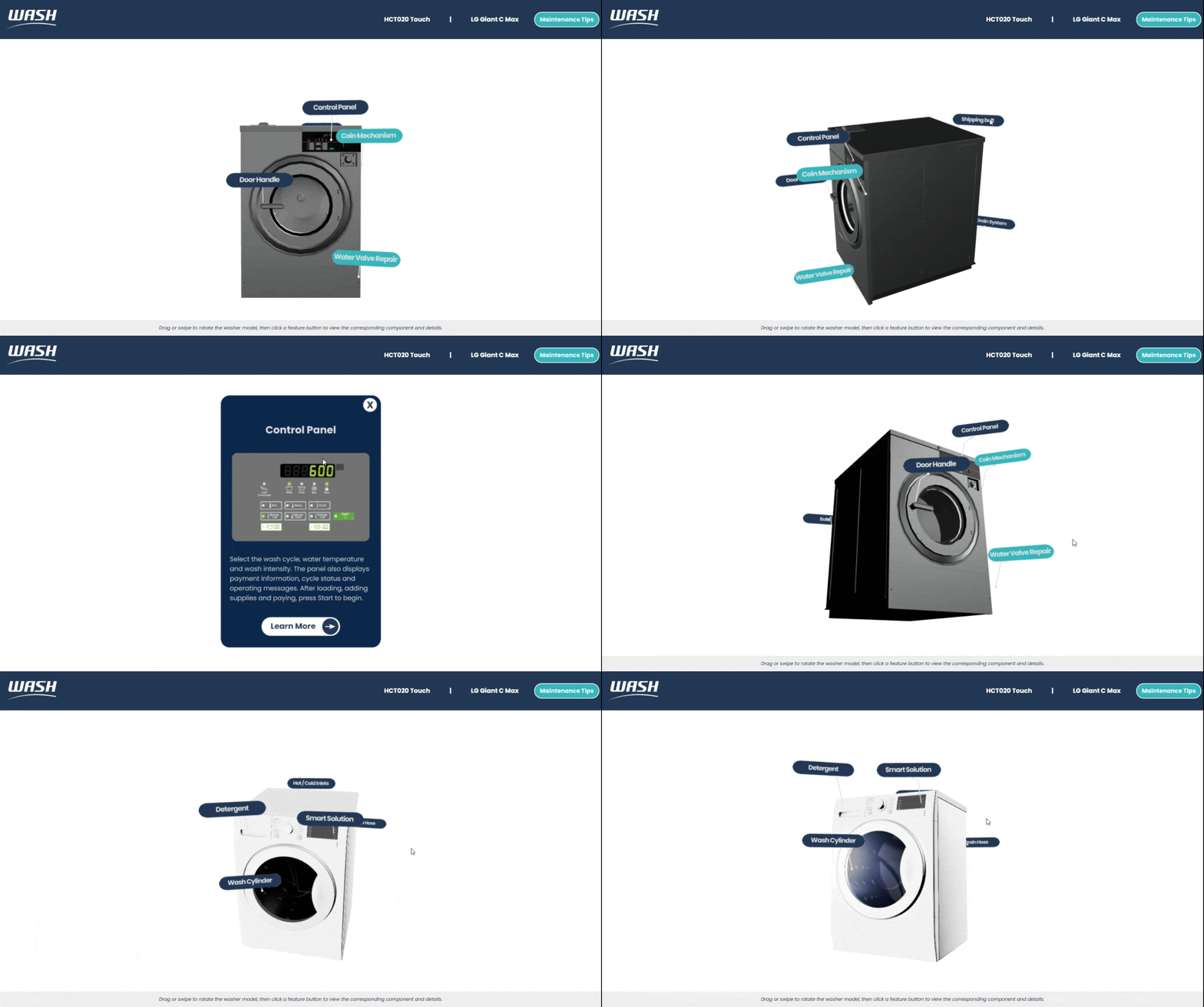
Short video and step-by-step guidance built from the same media library your technicians train on, instead of a PDF and a phone number.
04 A handoff that carries context.
When self-service can't resolve it, the session routes into your own support queue with the model, the fault and everything already tried attached to the ticket.
05 A record of what's breaking.
Which models, which faults, where self-service worked and where it didn't.
Why it matters
Halving your inbound support volume changes your dispatch math, not just your queue length. Every fault a customer resolves themselves is a call nobody answers, a ticket that never opens and, often, a truck that never rolls.
The ones that still reach you arrive already narrowed down, so your technicians spend their time on the work that genuinely requires them.
What customers get stuck on is worth as much as the savings. It tells you which guidance to build next, and which failures are worth engineering out of the product.
How it gets made
This one is a custom build. We start from your call data, because the fastest way to find the twenty faults worth answering is to look at what your team already answers every day. Then we produce the guidance, connect it to your content, and put a code on the units.
It runs under your brand and on your own API key, the same as everything else we build.
Start with your top ten faults.
Pull your last quarter of service calls. We'll tell you how many never needed a technician, and what it would take to answer those without one.